


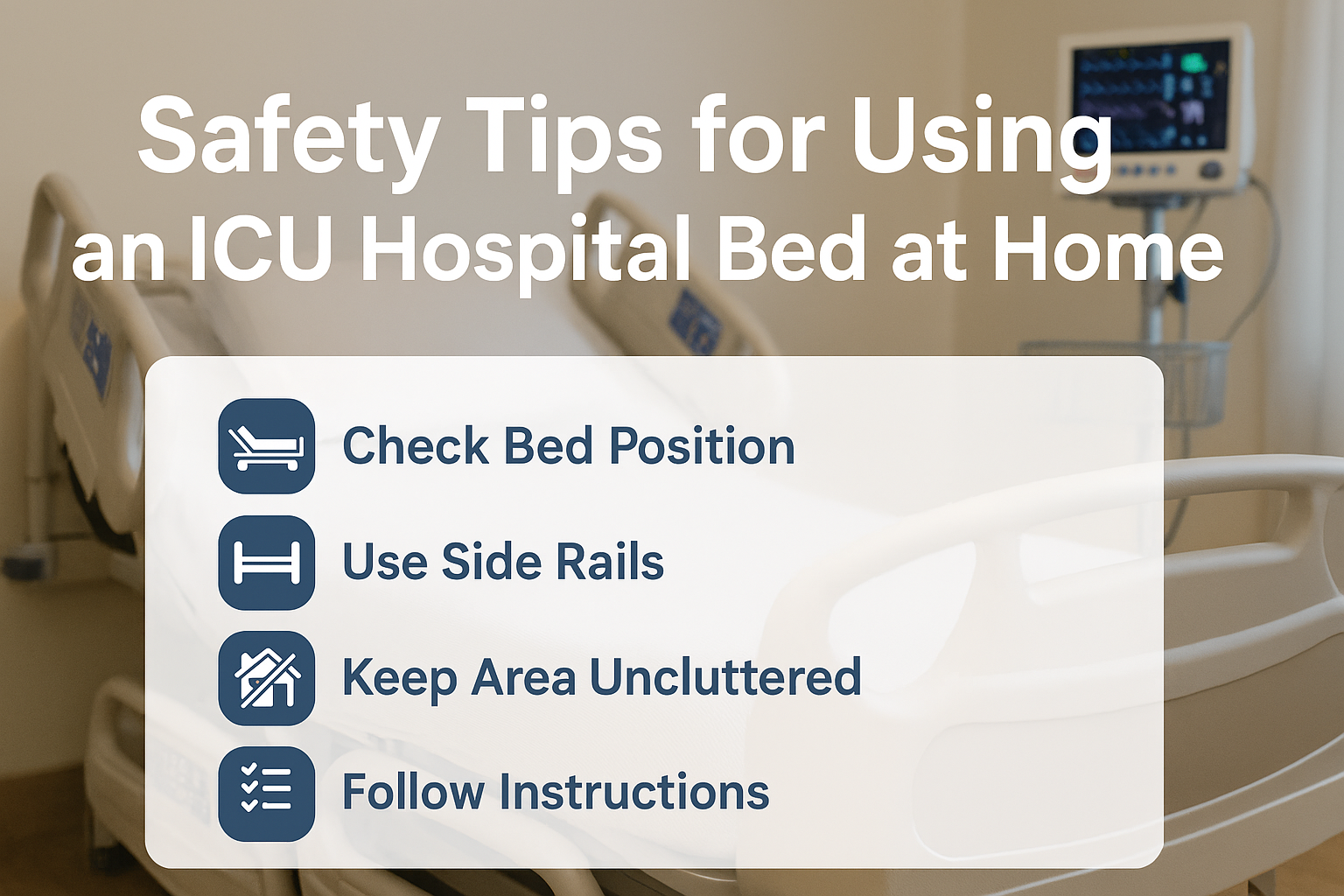
If your loved one needs specialized medical treatment, the first factor in your checklist is the ICU hospital bed.
A good ICU bed at home ensures the safety of the patient, improves their comfort, mobility and recovery. Improper use may increase the risk of falls, pressure injuries or equipment malfunction.
Why Choose an ICU Bed Home Care and Safety?
ICU hospital beds are designed with the cutting-edge features such as adjustable height, side rails, electronic controls and pressure-relief systems. These beds are recommended for-
- Home recovery after surgery
- Elderly patients with mobility challenges
- Long-term bedridden individuals
- Patient requiring frequent repositioning
- Critical care support at home.
When ICU beds are used at home for precautions, they reduce strain on caregivers and enhance patient comfort.
- Proper Installation: Before using an ICU hospital bed at home, make sure the bed is assembled by trained technicians. All the electronic parts are properly connected. The mattress fits securely without any gaps, and the wheels are functioning properly. Place the bed on a non-slippery and flat surface with enough surrounding space for movement and emergency access.
- Lock the wheels when in position: One of the tips for using an ICU bed at home safely is to lock the wheels when stationary. The ICU beds are equipped with wheels for easy movement. However, unlocked wheels can cause sudden shifts and increase fall risk. Double-check brakes before transferring the patient. Unlock only when relocation is required. These will reduce accidents.
- Adjust the bed Height for Transfers: Incorrect bed height is one of the leading causes of falls during transfers. Lower the bed to its lowest position when the patient is resting. Raise the bed to the caregiver’s waist height during medical procedures or repositioning. Make sure the patient’s feet touch the floor during assisted standing. A properly adjusted bed height promotes stability and prevents strain injuries for caregivers.
- Use side rails carefully and correctly: Side rails are designed to prevent accidental falls. To ensure hospital bed safety at home, the side rails must be used correctly. Raise the side rails when the patient is unattended, lower them carefully when helping with movement and avoid using rails as restraints unless medically recommended. Make sure there are no gaps between the mattress and rail to prevent limb entrapment.
- Prevent Pressure Ulcers with regular Repositioning: Long hours in one position can cause pressure sores. An important tip for Medical bed safety for home care suggests repositioning the patient every two to three hours. Use pressure relief or air mattresses if advised. This prevents bed sores. Also, caregivers must inspect pressure points daily.
- Manage electrical components safely: Modern ICU hospital beds come with motorized controls. Electrical safety is an important parameter for a hospital bed for home use. It is advised to use a grounded power outlet. Always keep cords away from water or foot traffic. Do not overload sockets with additional devices, and check wires regularly for wear or damage. Contact the hospital bed supplier immediately if you sense any malfunction instead of repairing it on own.
- Keep Area Clutter Free: One of the home hospital bed safety tips is to have a safe environment to reduce the fall risk. Do not keep any loose rugs near the bed. Ensure proper lighting near the bed. Keep medical supplies organized and accessible, and avoid placing obstacles around the bed. Elderly patients often wake up disoriented; it is thus advisable to have night lights.
- Train the Caregiver: Many accidents happen due to a lack of familiarity with bed functions. Train the caregiver on how to adjust height and positions properly. Understand emergency lowering features and practice safe patient transfers. If possible, request a demonstration on ICU bed safety at home from the supplier during installation.
- Patient Movement and Mental State: Patients recovering from trauma, surgery and neurological conditions may experience confusion or sudden movements. Supervise high-risk patients closely, use bed alarms if recommended and keep call bells within easy reach of such patients.
- Hygiene and Regular Cleaning: Preventing infection is the most critical factor in home ICU setups. Disinfect the bed surfaces using approved cleaning agents daily. Change the bed linens regularly. Clean remote controls and side rails frequently. Follow the healthcare service provider’s instructions for hospital bed sanitation. Proper hygiene protects the patient and their caregiver from infections.
- Routine Equipment Checks: Inspect mechanical parts monthly, test electric adjustments periodically and ensure mattress integrity remains intact. Many reputed hospital bed manufacturers and exporters provide service support for hospitals beds at home.
Some of the most Common Mistakes to avoid
- Leaving the wheels unlocked
- Using an incorrect mattress size
- Ignoring unusual noises in motorized systems
- Failing to reposition the patient
- Allowing untrained individuals to operate a bed.
Benefits of Safe ICU Bed Care At Home
When safety tips are followed, ICU hospital beds provide-
- Increased patient comfort
- Reduced caregiver strain
- Lower hospitalization costs
- Faster recovery support
- Improved mobility and positioning.
Safe use creates a controlled and supportive healing environment.
Using hospital ICU beds at home responsibly ensures the utmost patient care and safety. Whether for elderly care, post-surgical recovery or long-term medical needs, following the above safety tips ensures peace of mind and better outcomes.
FAQs
- Is it safe to use an ICU patient bed at home?
Yes, it is safe to use a good quality ICU patient bed at home that is installed properly, maintained and operated according to the manufacturer’s guidelines and medical advice. United Poly manufactures customized and premium-quality ICU beds aligned with your needs. - How often is a patient repositioned in an ICU bed?
It is advisable to reposition a patient in a hospital bed, typically every 2 to 3 hours, to prevent bed sores, unless otherwise directed by a healthcare provider. - Do ICU beds at home require professional maintenance?
Yes, routine checks and servicing by trained technicians are recommended to ensure electrical and mechanical safety. United Poly provides service support for hospital beds at home.
About the Author
United Poly is a trusted manufacturer and supplier of premium-quality medical equipment and hospital furniture. The brand is committed to improving patient care and clinical efficiency with its cutting-edge products.
With a commitment to innovation, durability and ergonomic designs, United Poly offers a wide range of products including ICU beds, electric hospital beds, overbed tables, surgical trays, stretchers and more.
The brand follows strict quality control norms, ensuring every product is designed for safety, comfort and long-term performance.