

In hospitals, clinics, and diagnostic centres, even small equipment plays a key role in patient care and operational efficiency.
One such important item is an emesis basin or kidney tray. The emesis basin, though small in appearance, has many uses. It is used for wound care, vomiting, dressing procedures, and handling medical waste.
What is Emesis Basin?
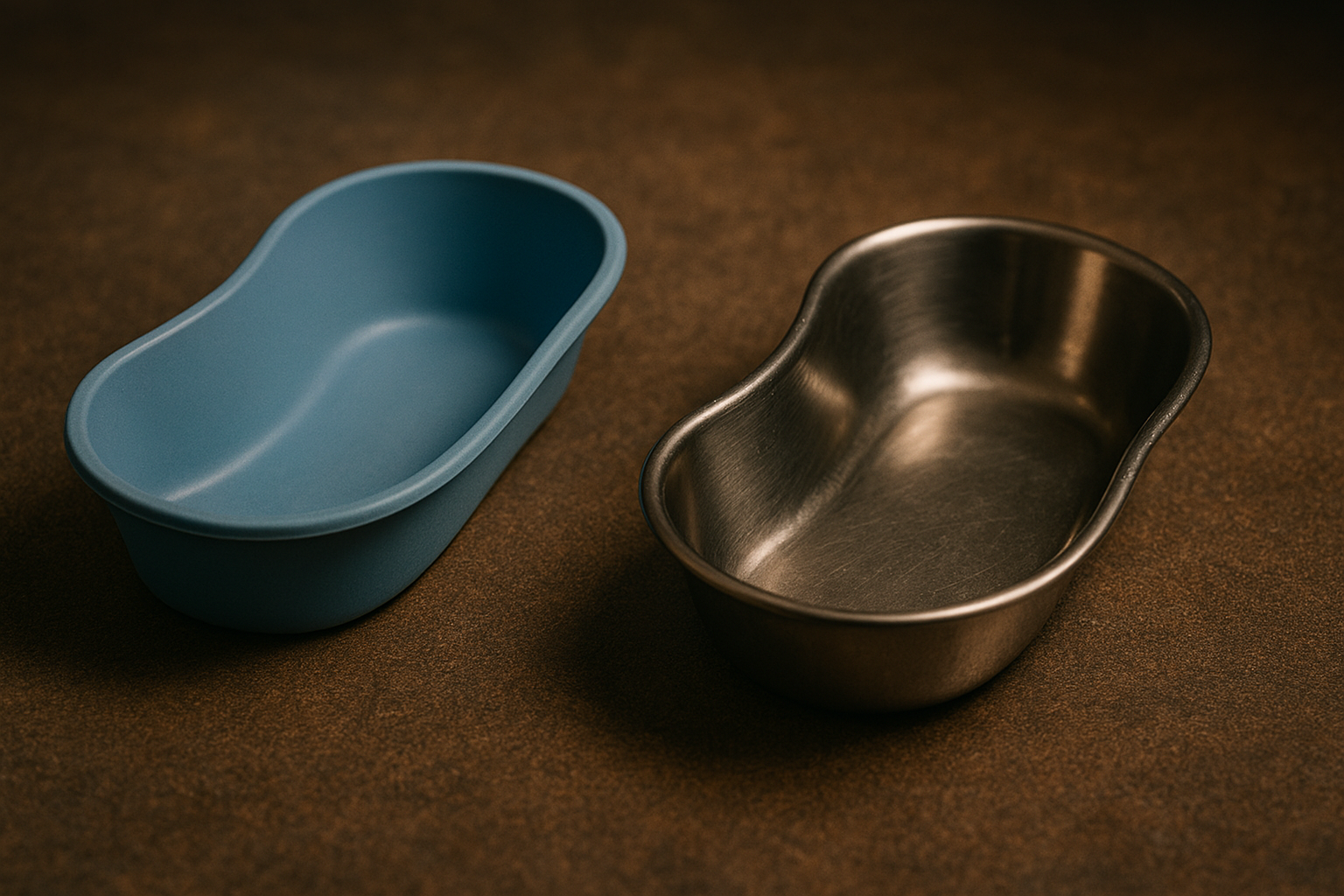
An emesis basin is a small, kidney-shaped medical bowl used in hospitals and healthcare settings to collect vomit, oral secretions or other bodily fluids during procedures or patient care.
It features a curved design that fits comfortably against the patient’s body, making it easy to hold and reducing the risk of spills. The kidney trays are made of stainless steel or disposable plastic and are widely used in healthcare facilities. They are available in stainless steel and plastic materials. When choosing between stainless steel and plastic emesis basins, consider the following detailed comparison of both materials to help you make an informed decision.
Plastic v/s Stainless Steel Emesis Basins- Initial Comparison
Plastic Emesis Basins
- These are cheaper at the time of purchase.
- They are chosen by small clinics, temporary medical camps and home healthcare providers.
- Their low upfront cost allows bulk procurement with minimal initial investment.
Stainless Steel Emesis Basins
- The stainless steel basins cost more initially due to material quality and manufacturing process.
- The higher price resonates with strength, reusability and longevity, which offsets initial expenses over time.
Plastic v/s Stainless Steel Emesis Basins Cost Comparison
When comparing plastic v/s stainless steel emesis basins from a cost perspective, here are the details-
- Plastic basins are economical, making them ideal for temporary or disposable applications. However, their short lifespan, limited sterilization tolerance and frequent replacement needs increase long-term expenses.
- Stainless steel basins are more expensive upfront, but they are durable and compatible with repeated sterilization. The replacement cost of stainless steel kidney trays is less, making them cost-effective over time.
Emesis Basin Price Comparison
Plastic kidney tray wins on initial cost, but stainless steel proves more economical in the long term due to durability and strength.
Emesis Basin Material Comparison- Plastic v/s Steel
Plastic Emesis Basin
- Lower Initial Cost: The plastic kidney trays are cheaper when compared with the stainless steel emesis basins. This makes them ideal for clinics with limited budgets or facilities that require large quantities quickly.
- Lightweight: The plastic basins have low weight, making them convenient for bedside use, home healthcare, mobile medical units and ambulatory services.
- Single-Patient Use: They are widely used in isolation wards, emergency camps and temporary healthcare setups to reduce cross-contamination risks.
- Do not last long: The plastic basins have limited durability. They are prone to cracking, bending and discolouration over time, especially when exposed to strong disinfectants or frequent washing.
- Sterilization issues: Most plastic basins cannot tolerate high-temperature sterilization and require chemical-based or low-heat cleaning methods.
- Higher Replacement Frequency: Due to wear and tear, the plastic basins need to be replaced often in high-patient volume environments, increasing long-term costs.
- Ecological impact: Frequent disposal causes ecological impact. Recycling options are limited in clinical settings, leading to an impact on the environment.
Stainless Steel Emesis Basins
- Higher Upfront Cost: Stainless steel kidney trays are costly initially due to the premium material and manufacturing standards.
- Long-lasting: They are resistant to dents, corrosion, heat and harsh chemicals, making them ideal for continuous hospital care.
- Excellent infection Control: The smooth and non –porous surface prevents bacterial buildup and supports strict hygiene and safety protocols.
- Resistant to Heat: The stainless steel basins can be repeatedly sterilized at higher temperatures without warping or degradation.
- Low long-term cost: The stainless steel trays have a long life span, which reduces replacement frequency and overall procurement expenses.
- Sustainable Choice: These trays are a sustainable choice as they are fully recyclable and generate far less waste compared to disposable plastic alternatives.
When comparing plastic v/s steel emesis basin cost, stainless steel trays are cost-effective in the longrun.
How to choose the best emesis basins for your healthcare facility?
- Understand your usage needs: Consider the patient volumes. High-turnover wards require durable basins that withstand frequent use, making stainless steel basins an ideal choice. Also, determine the purpose of use – means if the basins are required for single-use, reusable cleaning or specialized procedures.
- Material: Choosing the right material matters when purchasing emesis basins. Plastic basins are best for low-use, temporary setups or disposable requirements; they are not suitable for high-temperature sterilization. The stainless steel basins are ideal for high-use environments requiring frequent sterilization. They have higher upfront costs but lower long-term replacement expenses.
- Sterilization: Make sure the material is compatible with the facility’s sterilization methods. Choose the basins that have a non-porous surface, smooth to reduce bacterial growth and improve hygiene.
- Safety and Infection: Select the kidney trays that can withstand repeated cleaning without any scratches or surface degradation. Stainless steel emesis basins can withstand sterilization and are thus preferred by many healthcare facilities. Avoid basins that are made from materials that are prone to cracking.
- Sustainability: Recyclable and long-lasting materials reduce the ecological impact. If you are planning to invest in disposable single-use plastic basins, establish disposal protocols to adhere to medical waste regulations.
Choosing the right emesis basins improves hygiene, staff efficiency and long-term cost savings.
Plastic Emesis basins are cost-effective for temporary, low-use or disposable applications. Stainless steel basins are economical in the long run for nursing homes, hospitals and high-volume healthcare facilities.
Plastic emesis basin is cost-effective upfront; stainless steel delivers great value through durability, sustainability, hygiene and reduced long-term costs. Work with a professional medical equipment manufacturer to understand which material the kidney tray best suits your healthcare facility’s needs.
FAQs
- What is the plastic emesis basin price?
The price of the plastic emesis basin varies by size, brand and quantity. United Poly offers the premium quality plastic emesis basins at the best price. - Can plastic emesis basins be reused safely?
Yes, the plastic emesis basins, if properly cleaned, can be reused safely. Their lifespan and autoclaving tolerance are limited when compared to the stainless steel kidney trays. - What is the stainless steel emesis basin price?
The stainless steel emesis basin price is higher when compared with the plastic trays. United Poly offers the best stainless steel emesis basins at a competitive price.