

The right material is an important parameter for medical equipment, hospital furniture and healthcare accessories. This is very important for ensuring hygiene, durability, patient safety, and regulatory compliance. Among the most widely used plastics in the healthcare setup are HDPE and Polypropylene plastics. Both materials offer great performances, but their properties differ greatly depending on the intended medical application.
HDPE and PP Comparison for medical use is important, ensuring hospitals, clinics and medical equipment manufacturers make informed procurement decisions.
What is HDPE?
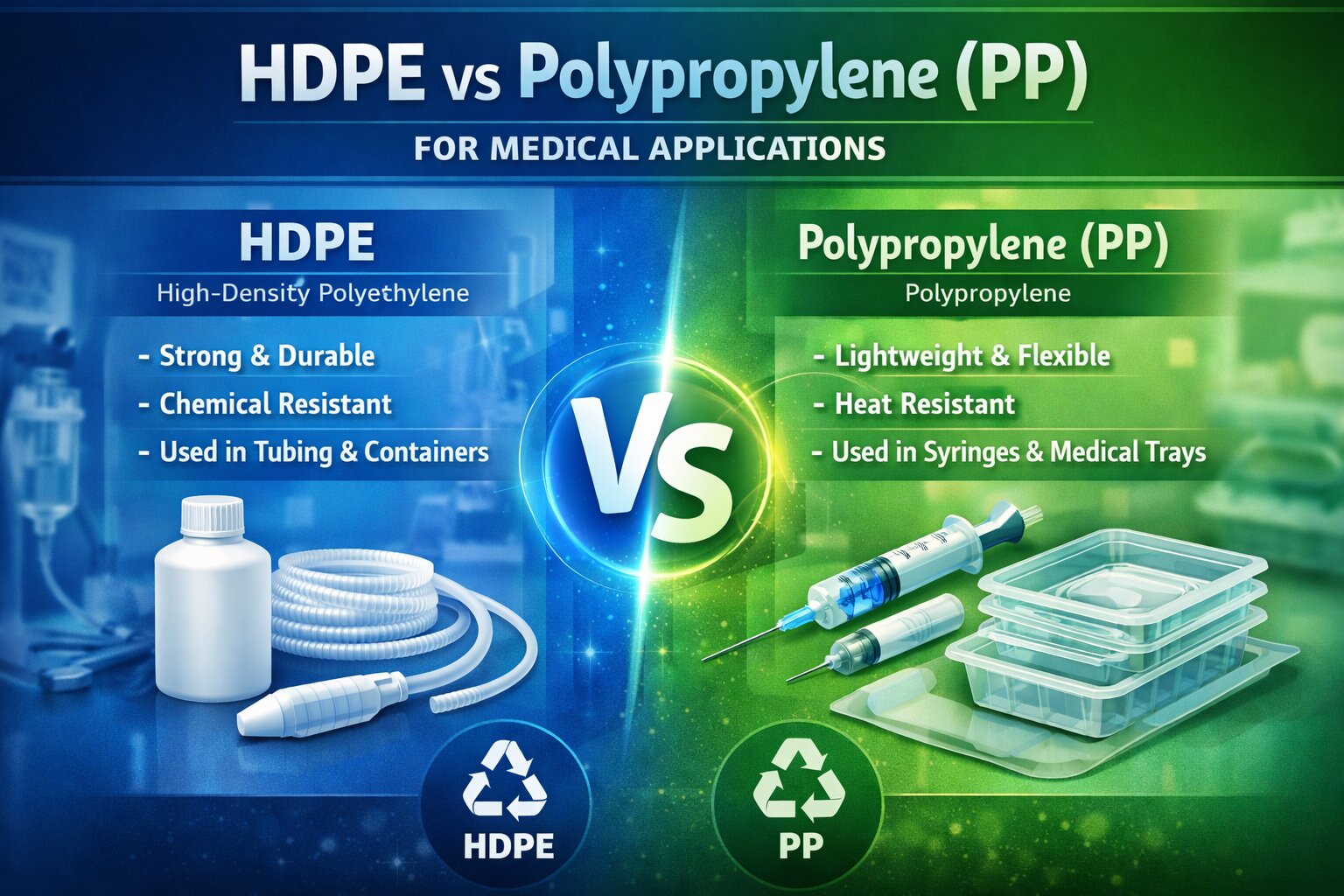
High-density polythene is a thermoplastic polymer made from petroleum. Known for its high strength to density ratio, impact resistance and chemical durability, HDPE is widely used in healthcare environments because it can withstand frequent cleaning, exposure to disinfectants and heavy daily usage.
Medical Grade HDPE is used in hospital trays, medicine containers, bed accessories, lab equipment, storage bins and medical packaging. The non-porous nature helps reduce contamination risks, making it apt for environments where hygiene is important.
It also offers excellent moisture resistance and long-term durability, ensuring lower replacement costs for healthcare facilities.
What is Polypropylene (PP)?
It is a versatile thermoplastic polymer extensively used in medical and healthcare applications. It is lightweight, very flexible and resistant to many chemicals, acids and solvents. PP plastic in the medical industry is frequently used in surgical trays, syringes, specimen containers, diagnostic devices, laboratory products, sterilization containers.
One of the significant USPs is that PP can tolerate repeated sterilization processes, including stem sterilization in autoclaves. With great fatigue resistance, it is best for equipment that requires repeated bending or movement without cracking. Because of these medical-grade properties,
Polypropylene is thus one of the most preferred materials for disposable and reusable medical components.
HDPE v/s PP Medical Applications
In the HDPE v/s PP Plastic Comparison, for healthcare use, here are some of the important factors to consider.
- Strength: HDPE is known for good toughness and impact resistance. It can withstand accidental drops, rough handling and continuous use without cracking or deforming. Thus, a perfect choice for storage containers, furniture accessories and transportation trays. PP offers great strength but is more flexible than HDPE. This flexibility is beneficial for certain medical devices; it may not provide the same level of impact resistance under heavy-duty conditions.
- Sterilization: When comparing HDPE v/s PP for Medical Applications, polypropylene has a leading edge when it comes to heat resistance. It can tolerate high temperatures and repeated autoclave sterilization cycles without losing its integrity. HDPE performs well under standard cleaning and disinfection procedures. However, it may not be the preferred option for applications requiring frequent exposure to high-temperature sterilisation. Hospitals, nursing homes and clinics that depend on autoclaving choose PP-based products.
- Chemical and Moisture Resistance: HDPE and PP have excellent resistance to chemicals, disinfectants and moisture. HDPE offers better protection against environmental stress cracking and long-term exposure to moisture. Thus making it useful for hospital environments where equipment is cleaned using strong disinfectants and exposed to humid conditions.
- Cost and Long-Term Value: HDPE is selected for larger healthcare products for its durability and cost-effectiveness over time. It can withstand wear and tear, reducing maintenance and replacement expenses. PP is economical for disposable products and lightweight medical parts. Polypropylene medical applications are easy to manufacture and are versatile, helping healthcare manufacturers maintain production efficiency while meeting quality standards.
Polypropylene v/s HDPE in Healthcare
| HDPE/PP | Situation |
| PP | Repeated Sterilization, flexibility and light weight products |
| HDPE | Durability, Impact Resistance, long-term performance |
| PP | Syringes, Specimen containers, surgical trays and laboratory. |
| HDPE | Hospital Storage Systems, medical packaging, transportation trays and durable healthcare accessories |
| PP | Autoclave Dependent Environments |
| HDPE | Reduce product damage during routine hospital operations |
The best healthcare products use both materials based on the performance requirements of individual parts.
Case Study
A multi–speciality hospital in Delhi was experiencing frequent breakage of plastic utility trays and storage containers used for transporting medical supplies between departments. The existing products cracked easily after use and exposure to disinfectants, resulting in higher replacement costs and operational disruptions.
The hospital management worked with a good medical equipment supplier who conducted a detailed assessment of the workflow of hospitals and material requirements. After evaluating the sterilization procedures, usage frequency and cleaning practices, the supplier recommended replacing the existing trays with medical-grade HDPE alternatives.
For departments where frequent autoclave sterilization is required, PP-based trays were introduced. The hybrid material strategy ensured that each department received products as per their operational needs.
This change showed great results-
- The tray replacement costs of the hospital were reduced by 30%
- Improved durability and impact resistance in high-traffic departments
- Enhanced compliance with infection control protocols
- Increased product lifespan despite daily exposure to disinfectants
- Improved staff efficiency due to fewer equipment failures
Choosing the right HDPE v/s Polypropylene for medical applications is an important strategic investment in patient safety, operational efficiency and product longevity. Partner with a dedicated medical equipment manufacturer and exporter who understands material dynamics, healthcare norms and hospital requirements.
FAQs
- What are HDPE Medical Applications?
HDPE medical applications are the use of high-density polyethene in healthcare products such as hospital trays, medical containers, packaging, storage bins, laboratory equipment and healthcare accessories due to its durability, chemical resistance and hygienic properties. United Poly offers the best quality HDPE equipment for your healthcare facility. - HDPE v/s PP? Which has Sterilization Compatibility?
PP offers better sterilization compatibility than HDPE, as it can withstand repeated high-temperature autoclave cycles without losing its structural integrity. - Medical Grade HDPE v/s Polypropylene? Which is better?
None is universally better. Medical Grade HDPE excels in durability and impact resistance; PP is preferred for applications requiring repeated sterilization and high heat resistance. United Poly offers the best quality medical-grade products at a competitive price.
About the Author
United Poly is a renowned Indian manufacturer, supplier and exporter of premium quality medical equipment backed by more than 4 decades of expertise in the healthcare setup. The brand is committed to delivering reliable and innovative healthcare solutions and holds internationally recognized certifications like ISO 9001: 2015, ISO 13485: 2016, FDA and CE.
With a commitment to quality, innovation and durability, United Poly manufactures an extensive range of medical equipment, including hospital furniture, mobility aids, walkers and sterilization products.